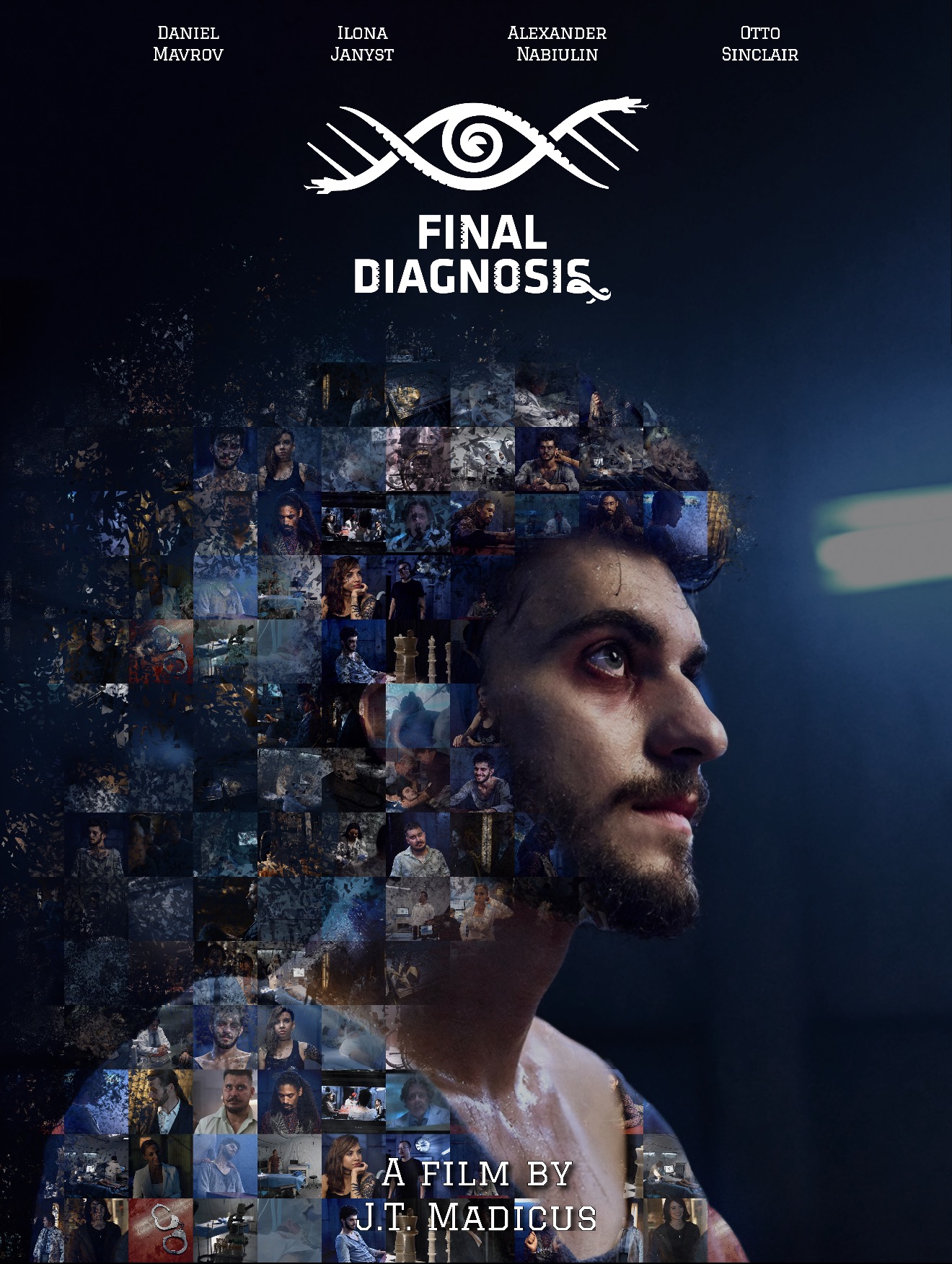


Medical thrillers often rely on dramatic emergencies and sensational plot twists, but Final Diagnosis takes a different approach. Written by J.T. Madicus, the psychological thriller combines the tension of a confined-room mystery with an unusually authentic look at medical diagnosis, creating a film that is as intellectually engaging as it is suspenseful. As Madicus explains, the project began with “a simple question. What happens when the people we rely on to save lives are placed under extreme pressure and uncertainty?” From there, he says, “the medical case became the center, but the world around it grew into something larger, involving surveillance, control, and hidden agendas.”
The story follows four troubled former doctors who are brought together under extraordinary circumstances to diagnose a critically ill patient before time runs out. Each physician carries personal baggage and conflicting opinions, forcing them to confront both their pasts and one another as they race against the clock to uncover the correct diagnosis. According to Madicus, “the idea was to take people who have lost their way and place them in a situation where their skills are needed again.” He adds, “that tension between who they were and who they have become creates a more interesting dynamic than simply presenting perfect professionals.”
Rather than relying on graphic violence or shocking twists, Final Diagnosis builds suspense through the diagnostic process itself. The film’s confined setting, mounting time pressure, and carefully chosen score create a constant sense of unease, while the heated debates between the doctors become just as compelling as the mystery they are trying to solve. Flashbacks gradually reveal how each character’s past has shaped their present, adding emotional depth alongside the central thriller narrative. Madicus notes that the premise “removes the safety net. In a traditional setting, doctors have resources, time, and support. Here, they have none of that. They are isolated, under threat, and forced to rely on instinct and knowledge alone.” He believes that “allows you to explore how people think under pressure, and how quickly confidence can turn into doubt.”

The performances help elevate the story, particularly as the strained relationships between the doctors begin to unravel. Their clashing personalities and competing theories create an atmosphere where every conversation feels consequential, leaving audiences wondering whether they can overcome their differences before time runs out. As the film progresses, even its most abrasive characters reveal moments of vulnerability, making them increasingly compelling despite their flaws. Madicus explains that he approached these relationships by “giving each character a distinct background and set of flaws. When you put people like that together under pressure, conflict happens naturally. Their disagreements, egos, and insecurities become part of the diagnostic process.”
What ultimately sets Final Diagnosis apart from other films in the genre is its commitment to medical authenticity. Instead of using medicine simply as a backdrop for suspense, the film grounds its mystery in realistic diagnostic reasoning. This educational foundation never detracts from the entertainment, rather, it makes every revelation feel earned and every decision more meaningful. The result is a film that successfully blends suspense with genuine medical insight, offering something both thriller fans and healthcare enthusiasts can appreciate. As Madicus explains, “a significant portion is grounded in real medical knowledge. The diagnostic process, the differential thinking, and even the final condition are all based on real concepts.” He also describes the film as “edutainment,” explaining that “the medical information is not presented separately from the story. It is part of the conflict. Each piece of information moves the story forward, so the audience is learning while staying engaged in the outcome.”
The film’s conclusion also suggests that the world of Final Diagnosis extends beyond the events of this single story. Rather than providing simple answers, it raises broader questions about medicine, ethics, and healthcare systems around the world. These morally complex themes encourage viewers to continue thinking about the film long after the credits roll. Madicus confirms that “there is definitely a larger world behind what you see in this film. The Agency, the characters, and the situations all suggest something bigger. This story stands on its own, but it also opens the door for further exploration.”
Final Diagnosis succeeds because it approaches the medical thriller from a fresh perspective. By pairing psychological tension with authentic medical science and character-driven storytelling, it delivers a thoughtful and engaging film that proves suspense doesn’t require excessive violence, it simply requires compelling characters, meaningful stakes, and a mystery worth solving. Ultimately, Madicus hopes audiences leave with more than just the satisfaction of solving the mystery. “I want them to feel engaged and to think. Not just about the mystery, but about the characters and the decisions they make,” he says. “I believe, ultimately, film is about potential. What people are capable of, even after they have lost their way.”