
For many audiences, Luke Arnold will always be John Silver.
His breakout performance in Black Sails transformed one of literature’s most iconic pirates into a layered, endlessly charismatic antihero, establishing Arnold as one of television’s most compelling performers. Since then, he’s portrayed everyone from Michael Hutchence in INXS: Never Tear Us Apart to investigative journalist Martin Scarsden in AMC’s Scrublands, building a career defined by characters who are as emotionally complex as they are memorable.
But acting was never the destination.
For Arnold, it has always been one expression of something much larger.
“I’m not sure if there is an overall identity that fits,” he says. “I guess storyteller works.”
It’s a deceptively simple answer that explains nearly every creative decision he’s made over the past decade. While many actors eventually branch into writing or producing, Arnold’s path has never felt like a career expansion so much as a return to where he started.
Long before professional film sets, television cameras, or bestselling novels, he was writing stories, drawing comics, painting, and staging plays with family and friends in Australia.
“They were all just different ways of turning my imagination into reality,” he says.
When it came time to choose a career, acting simply offered the most immediate way to collaborate with other creative people.
“Acting school was a far more enticing choice,” Arnold recalls. “I wanted to be creating shows with friends rather than sitting in a room on my own.”
The writing, however, never stopped.
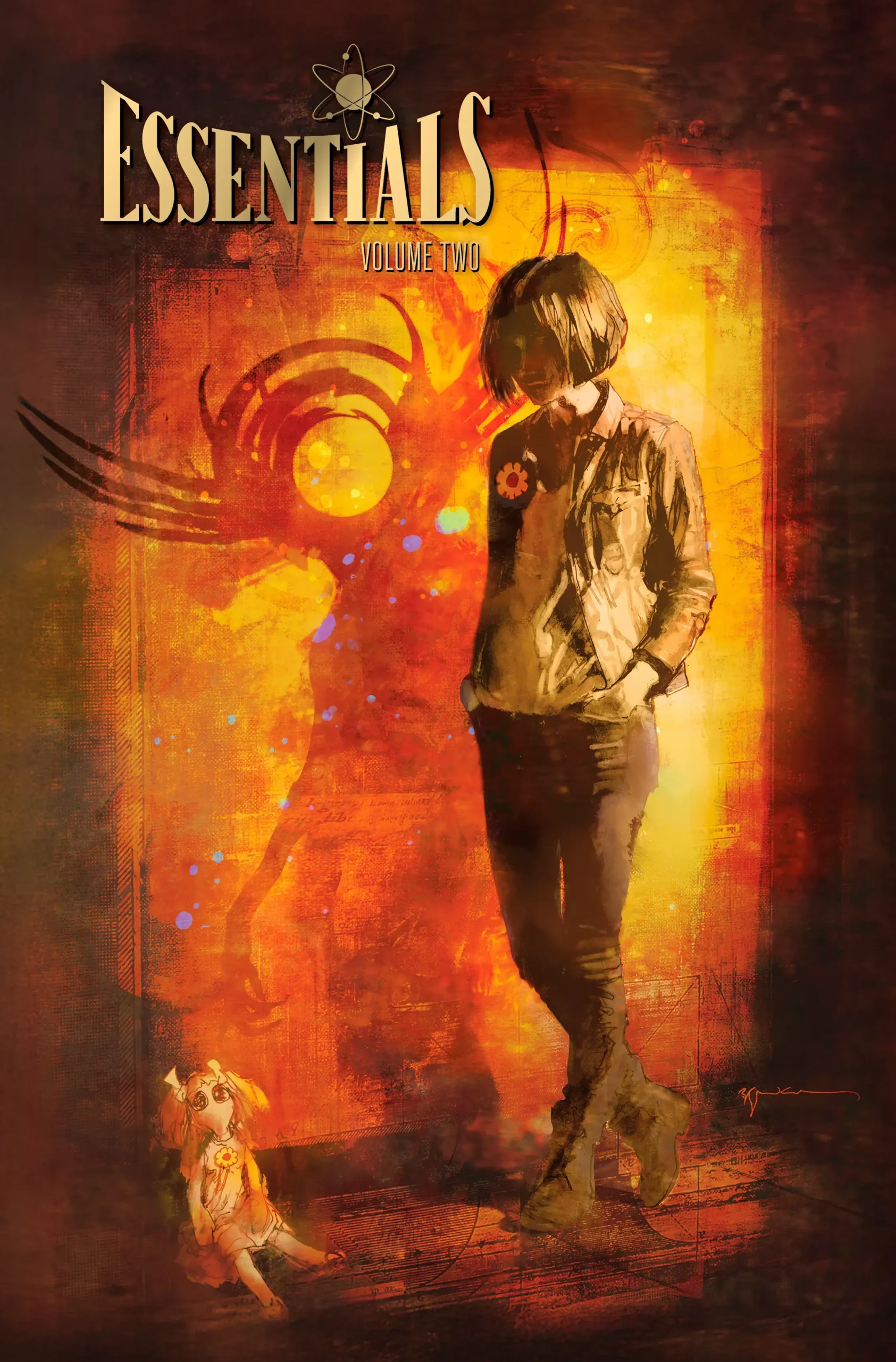
That creative instinct eventually led to The Fetch Phillips Archives, Arnold’s acclaimed fantasy-noir novel series, introducing readers to a voice every bit as distinctive as the characters he’d become known for portraying onscreen. More recently, it has found another outlet through Essentials, the graphic novel series he co-created with Chris “Doc” Wyatt. The upcoming release of Essentials Vol. 2 represents another step in a career that has steadily erased the traditional boundaries between actor, novelist, and comics creator.
Yet Arnold rarely talks about those pursuits as separate disciplines.
Instead, he describes storytelling as learning to serve whatever a project needs.
“They’re really all different jobs that serve the same goal,” he explains. “Sometimes that’s being the engine that drives a project from beginning to end, sometimes it’s giving your body and voice to someone else’s vision, and sometimes it’s bringing all your creative energy to a collaboration so you can create something none of you could have done on your own.”

That perspective wasn’t developed in isolation.
Throughout his acting career, Arnold intentionally looked beyond his own performance, seeking opportunities to understand every layer of production. On Peter Pan, he learned the mechanics of staging action sequences alongside the film’s swordmaster. During Broken Hill, he found himself welcomed into creative discussions by the filmmakers. On Black Sails, producers invited him into sound-mixing sessions and post-production, giving him a firsthand look at how a story continues to evolve long after filming ends.
“I’ve been lucky that in many of the projects I’ve done, I’ve been welcomed behind the scenes,” Arnold says. “All these experiences have taught me how my role as an actor fits into the story as a whole.”
Those lessons have shaped the way he approaches every creative partnership, particularly his collaboration with Wyatt on Essentials.
The pair’s working relationship has evolved alongside the series itself. As trust grew, so did their willingness to challenge one another’s ideas.
“I don’t care if he throws out my idea if he has something better,” Arnold says. “We’re both happy to leave our egos at the door and tell the best story possible.”
It’s a philosophy that mirrors Arnold’s larger outlook on creativity. He speaks less about authorship than contribution, less about ownership than collaboration.
“Ideally,” he says, “I just hope that the people I work with and the people who read or watch what I make believe that I make things better by being a part of them. If I can do that, I don’t mind what role I’m playing.”
That collaborative mindset extends to every medium he works in.
While writing prose offers complete control over a reader’s imagination, comics introduce another creative voice through the artists. Screen acting asks him to inhabit someone else’s vision, while novels require readers to meet him halfway. Rather than preferring one form over another, Arnold enjoys how each medium challenges different instincts.
“I think a lot of new writers, in all mediums, get caught up on rules and tricks,” he says. “Ultimately you’re just trying to give your audience everything they need to be taken on the ride.”
Even as Essentials Vol. 2 pushes further into surreal science fiction and expands the universe introduced in the first volume, Arnold remains careful not to think too far ahead. Although the series is already attracting adaptation interest, he deliberately avoids imagining it as a television show or film while he’s writing.
“I actively shut off that part of my brain,” he says. “I always focus on telling the best story for the medium I’m working in.”
It’s an approach that has quietly defined his career.
Rather than chasing a single identity, Arnold has spent years moving fluidly between performance, prose, and comics, allowing each discipline to inform the next. Every project adds another layer to his understanding of storytelling, whether he’s stepping in front of a camera, building a fantasy world on the page, or collaborating with artists to bring impossible realities to life.
For Luke Arnold, the medium has never been the point.
The story always comes first.