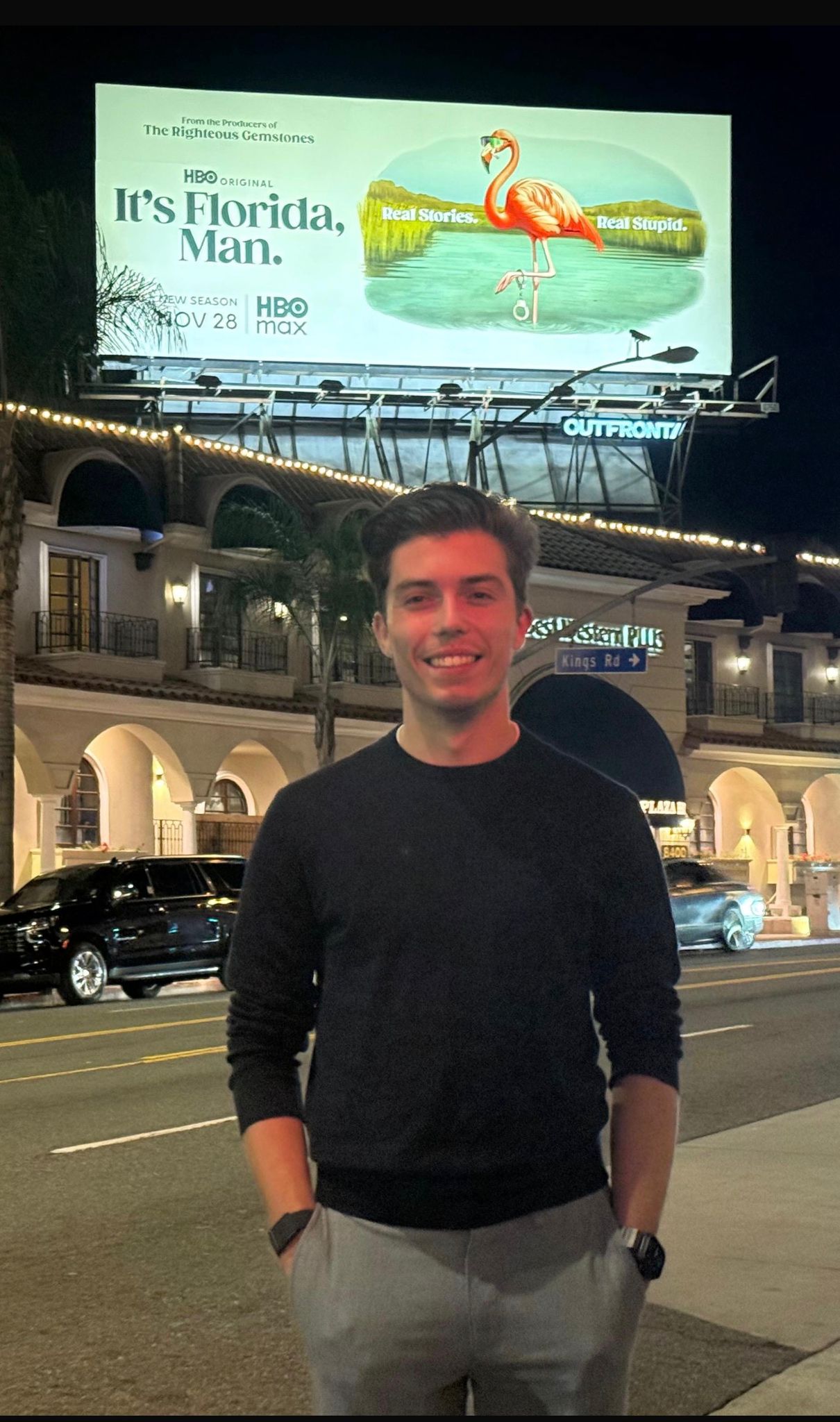

Most careers in post-production begin with an editor’s chair, a film degree, or a well-placed introduction. Benjamin South’s began with a theatre curtain and a sports pitch.
It’s an origin story that doesn’t fit the template, which is precisely why it works. South arrived in Los Angeles in 2017 from the UK carrying no industry pedigree and no ready-made network, just a deep-seated understanding of what it takes to keep people moving together under pressure. Theatre taught him precision and timing. Sport taught him that roles matter, that trust is earned, and that the best teams don’t wing it on game day. Post-production, it turned out, asked for exactly the same things.
What followed was years of building from the ground up, working across editorial, workflow, delivery, and logistics on projects spanning television, film, and live events. His credits include the Billboard Women in Music Awards 2023 and Amaffi: Savanna Campaign, work that quietly developed the operational instincts he would later bring to bear at the highest level of the business. The reputation he built was consistent, and in post-production, consistency is the whole job.
That reputation eventually landed him on HBO’s It’s Florida, Man, the anthology comedy created by Mark Herwick and Jeff Tomsic and produced by Danny McBride, Jody Hill, and David Gordon Green’s Rough House Pictures. Adapted from the Australian series True Story with Hamish & Andy, the show pairs genuine documentary interviews with cinematic scripted recreations of the real events being described. Season 1 premiered in October 2024 following with Season 2 in November 2025, and across all six episodes South held dual credits as Post Producer and Post Production Supervisor simultaneously.
His thinking about what that ownership actually means is the thing worth understanding.
“You’re always in service of the creative,” South says. “The scale of the team, the schedule, and the deliverables might shift, but the goal remains the same: support the creatives and deliver the best possible version of the project, on time and efficiently. What becomes critical is alignment. You need a strong executive team at the network or distributor who are clear on expectations, and a creative team who can articulate their vision. From there, my role is to build the right schedule and the right team around that vision and people the creatives trust and genuinely want to work with.”
On It’s Florida, Man, that alignment was stress-tested by the show’s unusual production structure. Documentary segments shot in the spring. Scripted recreations followed months later in the fall. The post team is responsible for constructing complete, emotionally coherent episodes in the space between those two realities, building around footage that hasn’t been filmed yet and holding precise space for beats that are still weeks away from existing. It demanded a workflow that could move faster, reach further, and adapt without breaking.
Working with Mitch Martin and Jake Keller at post facility Cuttingboard, South implemented a fully cloud-based pipeline using LucidLink that brought editors inside a live shared project within 24 hours of footage leaving Florida. The machine was running before the dust had settled on set.
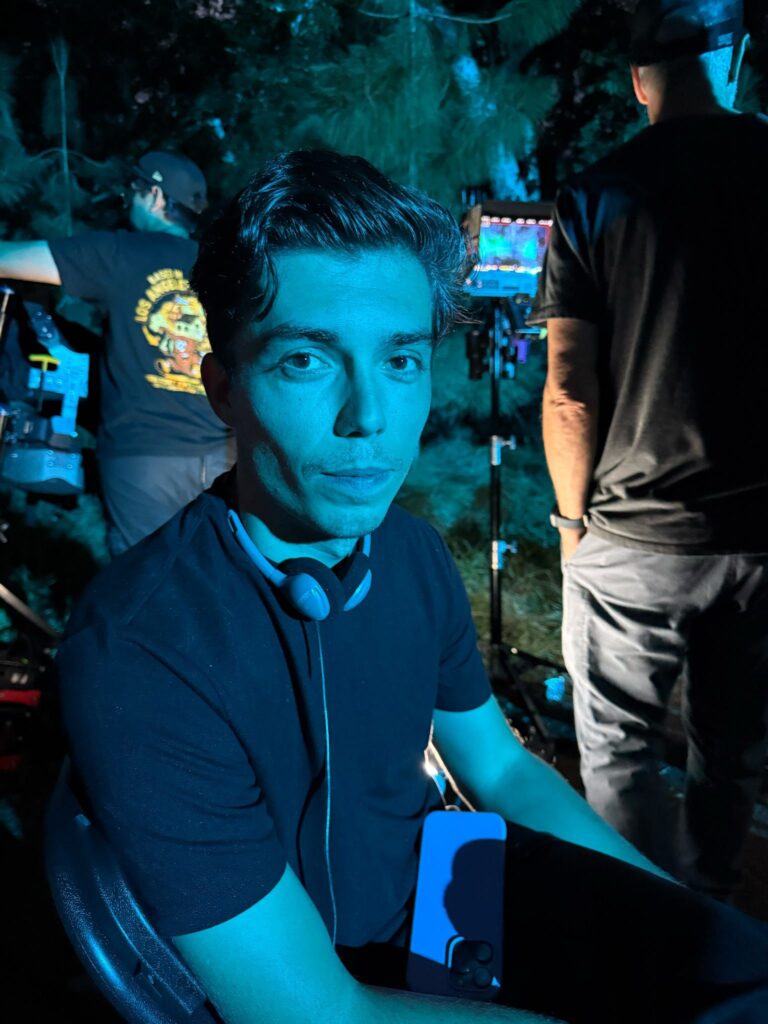
“It wasn’t that traditional workflows wouldn’t work,” South says. “It was more that we were constantly asking, what’s the most efficient way to do this? We always started from the same place: we need to edit the episode and tell the story as well as possible. So it wasn’t about abandoning traditional workflows for the sake of it. It was about pushing toward something more efficient and more forward-thinking. The goal was always the same: remove bottlenecks, keep the creative moving, and use technology in a way that genuinely supports the storytelling.”
The creative discipline that ran alongside that system was equally significant. Working closely with showrunner and director Jeff Tomsic, lead editor Josh Crockett, post coordinator Brian Tooker, and HBO Post Executive Shannon Hall, the team built documentary cuts with deliberately mapped emotional gaps, structurally sound episodes that didn’t need the recreations to hold together but became exponentially stronger when they arrived.
In January 2026, HBO renewed the show for a third season. South steps into it as Co-Executive Producer, a title that places him inside the creative conversation from the very beginning of the process. He has a clear view of what that means for the industry at large, and characteristically, he frames it in terms of what serves the work rather than what elevates the title.
“I do think this kind of workflow is where the industry is heading,” South says. “It allows post-production to be far more flexible and responsive, which is something that should absolutely be embraced. That said, I think we were slightly ahead in how fully we leaned into it, building a system that genuinely supported the creative rather than just replicating traditional workflows. Each show is unique and deserves to be treated individually.”
That final note is the clearest window into how South actually thinks. He is not advocating for a single solution or positioning himself as the author of a universal model. He is advocating for a way of approaching problems, one where the story always comes first, the systems exist to protect it, and the people building those systems understand every layer of what they’re protecting.
Season 3 is where that thinking gets its broadest canvas yet.